
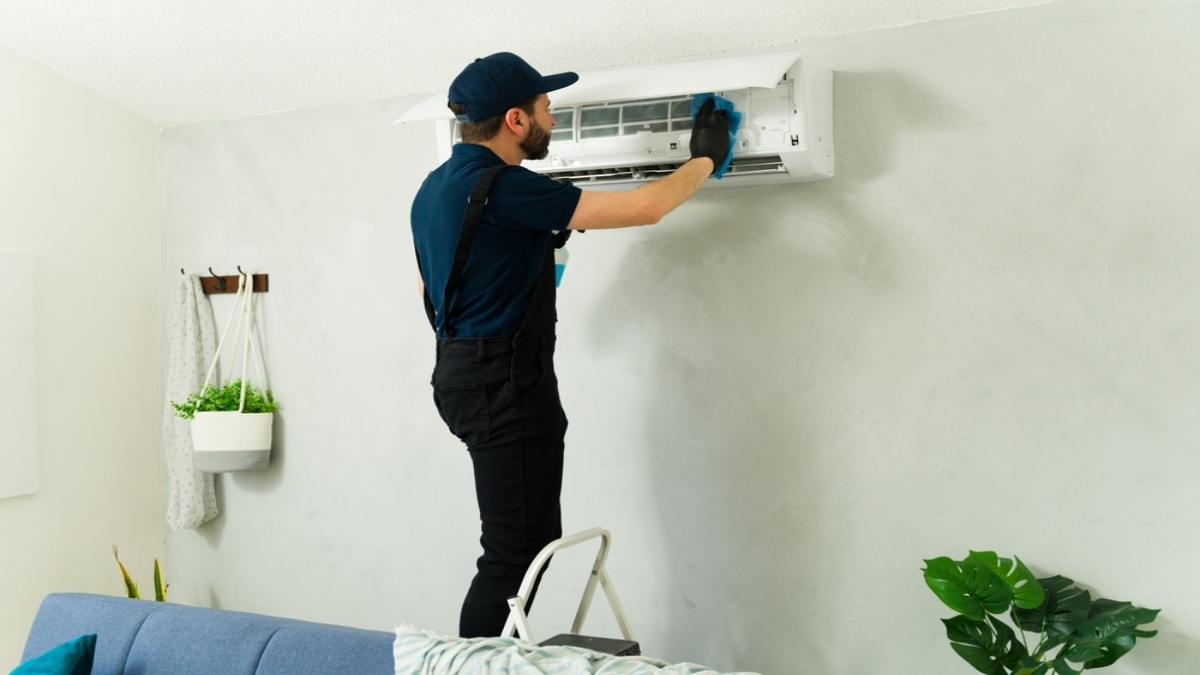
You had your AC serviced. The technician came, cleaned the filters, checked the gas, signed off the job sheet — and your DEWA bill the following month was just as high as before, if not higher. It’s one of the most frustrating situations a Dubai homeowner or tenant can be in, because you did the right thing. You spent the money. And it made no difference. If you’ve also noticed your home is getting dusty again within days of cleaning, that’s a connected symptom — one we cover in detail in our guide on why Dubai homes stay dusty even after regular cleaning.
The reason this happens more often than people realise is that a standard AC service only addresses part of the system. The filters, the refrigerant, the electrical connections — these are all important. But the ductwork, the coil condition, the internal airflow restriction — these are the things that actually drive energy consumption up, and they rarely get touched during a routine service call. HVAC air duct cleaning is a separate process entirely, and it’s the missing step that most standard service contracts quietly leave out.
This guide is put together by Ventrix Enviro Services — a Dubai-based AC duct cleaning and HVAC disinfection company — for people who are already past the “should I service my AC?” stage and are asking a harder question: why isn’t the service actually working, and what does a system need to run efficiently in Dubai’s climate? If your system also has a musty smell when it starts up, that’s usually a sign of mould inside the ductwork or on the coil — something we’ve covered in full in our guide on why AC units smell musty in Dubai and what the mould problem involves. For everything else — the energy side specifically — the answers below involve a few things most AC companies won’t tell you upfront, because fixing them properly takes more time and costs more than a basic service visit.
What a Standard AC Service Actually Covers — and What It Doesn’t
Most routine AC service packages in Dubai include filter cleaning or replacement, refrigerant level check, a visual inspection of the indoor and outdoor units, coil rinsing (usually with water, not chemical treatment), and electrical checks. For a split unit, this takes 45 minutes to an hour. For a ducted central system, it might take a bit longer.
What it almost never includes: cleaning inside the ductwork itself, chemical treatment of the evaporator coil, inspection of the air handling unit (AHU) drain tray, checking for duct leakage, or assessing whether airflow is balanced across zones.
The distinction matters because the ductwork and coil condition have a direct, measurable impact on how hard the compressor has to work to maintain your set temperature. A dirty coil or a partially blocked duct doesn’t just make the air quality worse — it forces the entire system to run longer cycles, draw more current, and ultimately push your electricity bill up with every passing month.
A standard service keeps your AC running. A full system clean — including the ducts and coil — is what keeps it running efficiently. These are not the same thing, and in Dubai’s climate, the gap between them shows up directly on your DEWA bill.
The Dirty Coil Problem: The Single Biggest Driver of Wasted Energy
The evaporator coil is where the heat exchange happens inside your indoor unit. Warm room air passes over cold refrigerant coils, the heat transfers, and cooled air gets pushed back into the room. It’s a simple process, but it depends entirely on good surface contact between the air and the coil fins.
Over time, dust, skin particles, pet dander, and — in Dubai’s climate especially — fine desert sand builds up on those fins. Even a thin layer of debris acts as insulation, reducing the coil’s ability to absorb heat from the air. The system detects that the room isn’t reaching the set temperature as quickly as it should, and the compressor keeps running to compensate. It’s doing more work to achieve the same result.
Studies on HVAC efficiency have consistently shown that a coil with even moderate fouling can reduce system efficiency by 10–20%. In Dubai, where an AC system can account for 60–70% of a home’s total electricity consumption, a 15% efficiency loss isn’t a rounding error — it’s a meaningful sum on every monthly bill.
A water rinse during a standard service removes surface dust. It doesn’t remove the biofilm, mineral deposits, or compacted debris that builds up inside the fin structure over repeated use cycles. That requires a proper chemical coil clean — a step that most routine service packages simply don’t include.
How Blocked or Leaking Ducts Force Your System to Overwork
For properties with ducted central AC — which covers a large proportion of Dubai villas, townhouses, and older apartment buildings — the ductwork is the hidden variable that most energy conversations completely miss.
There are two separate issues at play here, and both cause the same outcome: the system runs harder and longer than it needs to.
Blocked or partially restricted ducts
As dust and debris accumulate inside ductwork over months and years, the internal cross-section narrows. Less air gets through per cycle, which means the system has to run more cycles to move the same volume of conditioned air through the space. Rooms feel like they take longer to cool. The thermostat stays on longer. The compressor works more. The bill goes up.
This is exactly the hidden problem we explored in detail in our earlier guide on why Dubai homes get dusty so fast even with regular cleaning — the ductwork is both the source of poor air quality and a drag on system performance.
Duct leakage
In many Dubai properties — particularly those built before 2010 — the flexible ducting used in ceiling voids degrades over time. Joints separate, insulation splits, and conditioned air leaks into the ceiling void rather than reaching the room. You’re paying to cool a space that no one occupies.
Industry estimates suggest that in poorly maintained duct systems, 20–30% of conditioned airflow can be lost to leakage before it ever reaches the living space. That’s an enormous amount of wasted energy running silently inside your ceiling every time the system operates.
💡 Worth knowing: If you have rooms that never seem to cool properly regardless of the thermostat setting, duct leakage or severe duct restriction is almost always part of the explanation — not just the size of the unit or the outdoor temperature.
The AC Duct Cleaning Cost Question: What You’re Actually Comparing
When people search for AC duct cleaning cost or air conditioning duct cleaning prices in Dubai, they’re often trying to decide whether the expense is worth it. It’s a fair question — and the honest answer depends on how you frame the comparison.
The real comparison isn’t “duct cleaning cost vs. zero cost.” It’s “duct cleaning cost vs. what you’re currently overpaying on electricity every month because your system is working harder than it needs to.”
Here’s a realistic reference for AC duct cleaning prices in Dubai based on property type. These are general market ranges — actual quotes will vary depending on system complexity, level of contamination, and whether disinfection is included:
| Property Type | Duct Cleaning (approx.) | With Disinfection | Typical Frequency |
|---|---|---|---|
| 1–2 bedroom apartment | AED 600 – 900 | AED 900 – 1,300 | Every 12 months |
| 3 bedroom villa / townhouse | AED 1,000 – 1,600 | AED 1,400 – 2,200 | Every 12 months |
| Large 4–5 bedroom villa | AED 1,800 – 3,000 | AED 2,400 – 4,000 | Every 12–18 months |
| Commercial office space | AED 2,500 – 6,000+ | AED 3,500 – 8,000+ | Every 6–12 months |
| Post-construction clean | AED 1,500 – 4,000+ | Included or add-on | Once, before occupancy |
Now set that against the energy side of the equation. If your monthly DEWA bill averages AED 1,500–2,500 during peak summer months and your system is running at 15% below its designed efficiency, that’s AED 225–375 per month in avoidable waste. A full duct clean and coil service pays for itself within a single cooling season for most mid-size Dubai properties — and the benefit carries forward every month after that.
The AC air duct cleaning cost looks very different when you factor in that context. It’s not a maintenance expense. For most homes that haven’t had a proper duct clean in 18 months or more, it’s closer to a recovery of money that’s been slowly leaking out every time the system runs.
Why Choosing the Right AC Cleaning Company Matters More Than Price
Dubai has a large and fragmented market for AC maintenance. There are dozens of companies offering services ranging from AED 99 filter cleans to comprehensive HVAC overhaul contracts. The price difference isn’t just markup — it often reflects a fundamental difference in what the job actually involves.
A low-cost service from an AC cleaning company that sends one technician with a domestic vacuum and basic tools will clean the visible surfaces. It won’t touch the internal duct walls, won’t properly address the evaporator coil, and won’t identify duct leakage or airflow issues. The system will look serviced. The bill won’t change.
When evaluating any AC cleaning company in Dubai, these are the questions worth asking before you book:
- Do they use negative pressure (vacuum extraction) equipment during duct cleaning, or do they just brush and leave debris inside the system?
- Does their service include chemical coil cleaning, or just a water rinse?
- Will they inspect the AHU drain tray and clear any blockages?
- Is duct disinfection included or available as an add-on?
- Do they provide a service report documenting what was done and what they found?
- Are their disinfectants registered with UAE regulatory bodies and safe for occupied properties?
If the answer to most of these is no, the service is unlikely to have any meaningful impact on your energy bills, regardless of how cheap or how thorough it sounds in the sales conversation.
A Practical Guide: How to Actually Reduce Your AC Running Costs in Dubai
This section is the practical part — a straightforward, prioritised list of what actually moves the needle on energy consumption for AC systems in Dubai. Not generic tips about setting the thermostat to 24°C. Actual system-level actions that reduce load and improve efficiency.
Step 1 — Get the ductwork properly cleaned
If your ducts haven’t been professionally cleaned in the last 12–18 months, this is the highest-impact action available to you. Cleared ductwork restores airflow to its designed capacity, which means the system reaches set temperature faster, runs shorter cycles, and draws less current per hour of operation. Our professional HVAC air duct cleaning service in Dubai uses negative pressure extraction and covers the full duct system — not just the visible vents.
Step 2 — Include a chemical coil clean
A water rinse during routine service isn’t enough for Dubai’s climate. The evaporator coil needs chemical cleaning — a process that dissolves biofilm and compacted debris from inside the fin structure and restores proper heat exchange. This is one of the most direct interventions available for improving energy efficiency.
Step 3 — Address the mould problem if present
Mould on the coil or inside ductwork adds to the insulation layer on heat exchange surfaces and restricts airflow. It also compounds over time if left untreated. If your system has a musty smell on startup — a reliable indicator — read our detailed guide on why AC units smell musty in Dubai and what the mould problem actually involves. Disinfection as part of a duct clean addresses this properly.
Step 4 — Check and upgrade filters
Standard fibre filters that come with most Dubai AC systems are designed to protect the unit, not to improve indoor air quality. They allow a significant amount of fine particulate through, which then settles on the coil and inside the ducts. Upgrading to a higher-MERV filter (within the system’s airflow tolerance) slows down the rate of internal contamination and extends the time between required cleans.
Step 5 — Have the AHU drain tray inspected and cleared
A blocked condensate drain causes water to back up in the tray and, in some systems, triggers a safety cut-out that intermittently shuts down the unit. More commonly, it creates a standing water environment inside the AHU — exactly the conditions that encourage mould growth on the coil and in adjacent ductwork. This is one of the most commonly overlooked items in routine service visits and one of the most consequential.
Step 6 — Check for duct leakage in older properties
If your property was built before 2010 and the ductwork has never been inspected, it’s worth having a qualified technician assess the integrity of the flexible duct joints. Even basic repairs to obvious leakage points can meaningfully improve the amount of conditioned air that actually reaches the room rather than disappearing into the ceiling void.
- Ductwork professionally cleaned — negative pressure extraction, not surface-only
- Evaporator coil chemically cleaned — not just rinsed with water
- Musty smell investigated and mould treated with proper disinfection
- Filters upgraded or replaced — not just rinsed and re-fitted
- AHU drain tray inspected and condensate drain cleared
- Duct leakage assessed in properties older than 10–15 years
The Timing Question: When to Do This in Dubai
The optimal time for a full system clean in Dubai is between February and April — after the mild winter when usage has been lower, and before the system goes into its peak summer load from May through September. A clean system entering summer runs at full efficiency from day one of the heavy usage period, which is when the energy savings are largest.
The second-best window is October to November, after the summer peak. If you’ve been running a system hard through a Dubai summer without prior preparation, the accumulated debris from those months of heavy use will continue to affect efficiency through the following year unless it’s cleared.
For commercial properties — offices, retail, restaurants — the calculation is the same but the numbers are larger. A commercial space running a central HVAC system for 10–12 hours a day, six or seven days a week, in a Dubai summer has much higher stakes around system efficiency than a residential property. The AC duct cleaning and disinfection service for Dubai commercial and residential properties should be on a defined schedule, not treated as something to book when problems become obvious.
The properties that consistently manage energy costs well in Dubai share one common habit: they treat duct cleaning and coil service as a scheduled maintenance item, not a reactive fix. The reactive approach always costs more — in energy bills, in emergency repair call-outs, and in shortened equipment life.
Questions People Ask About AC Efficiency and Duct Cleaning Costs
For a standard 1–2 bedroom apartment in Dubai, air conditioning duct cleaning typically costs between AED 600 and AED 900. With disinfection included, expect AED 900 to AED 1,300. Larger properties cost more — a 3–4 bedroom villa is generally in the AED 1,000 to AED 2,200 range depending on duct complexity and the level of contamination found. Always confirm whether the quoted price includes coil cleaning, drain tray inspection, and disinfection — these are frequently quoted separately.
In most cases, yes — particularly if the ducts haven’t been cleaned in over a year and the coil is included in the service. The efficiency gains come from improved airflow (shorter run cycles) and better heat exchange at the coil surface. For systems that have been running heavily restricted, a 10–15% reduction in energy consumption is realistic. The impact is most visible during the summer months when the system is running for extended hours each day.
A standard service visit typically covers filters, refrigerant, and basic visual checks — but not ductwork cleaning or chemical coil treatment. If those two elements weren’t part of the service, the system’s underlying efficiency hasn’t changed. Ask your provider specifically whether the ductwork was vacuumed internally and whether the coil received a chemical clean. In most cases, a standard service simply doesn’t include these steps unless explicitly requested or quoted separately.
Yes — in Dubai, the tenant pays the DEWA bill, which means the efficiency of the AC system directly affects the tenant’s monthly costs, not just the landlord’s maintenance budget. For a tenant in a property where the ducts haven’t been cleaned in years, the energy savings over a summer can easily cover the cost of a professional clean. It’s also worth noting that in some cases, poor AC system condition is grounds for maintenance requests under Dubai tenancy regulations.
The most important thing is comparing like for like. A quote of AED 500 that covers filter cleaning only is not comparable to a quote of AED 1,400 that includes duct extraction, chemical coil clean, drain tray service, and disinfection. Ask each company for an itemised breakdown of exactly what is and isn’t included. Also check whether they use HEPA-filtered negative pressure equipment for duct cleaning — this is the industry standard for proper debris removal and makes a significant difference to the quality of the result.
For most Dubai residential properties, once every 12 months is the right interval — ideally in March or April before the summer load begins. Commercial properties, restaurants, and healthcare facilities typically require more frequent servicing (every 6–12 months) given higher occupancy and air quality obligations. If you’ve just moved into a property with no service history, treat it as overdue regardless of when it was last nominally serviced.