
How Can You Tell If Your Building's HVAC System Needs Maintenance Before It Breaks Down?
Building HVAC system maintenance usually gets attention only after something fails, and by then the fix is rarely small. The better habit is learning to read the early signals: a floor that never quite cools, a fan that sounds different from last month, a DEWA bill that climbs when nothing else has changed. In Dubai, where many buildings run cooling for most of the year, those signals are easy to wave away until a chiller trips on a July afternoon and the tenant calls begin. This guide covers what to watch for, which checks a building manager can do without special tools, and when it makes sense to bring in a team offering HVAC annual maintenance services in Dubai.
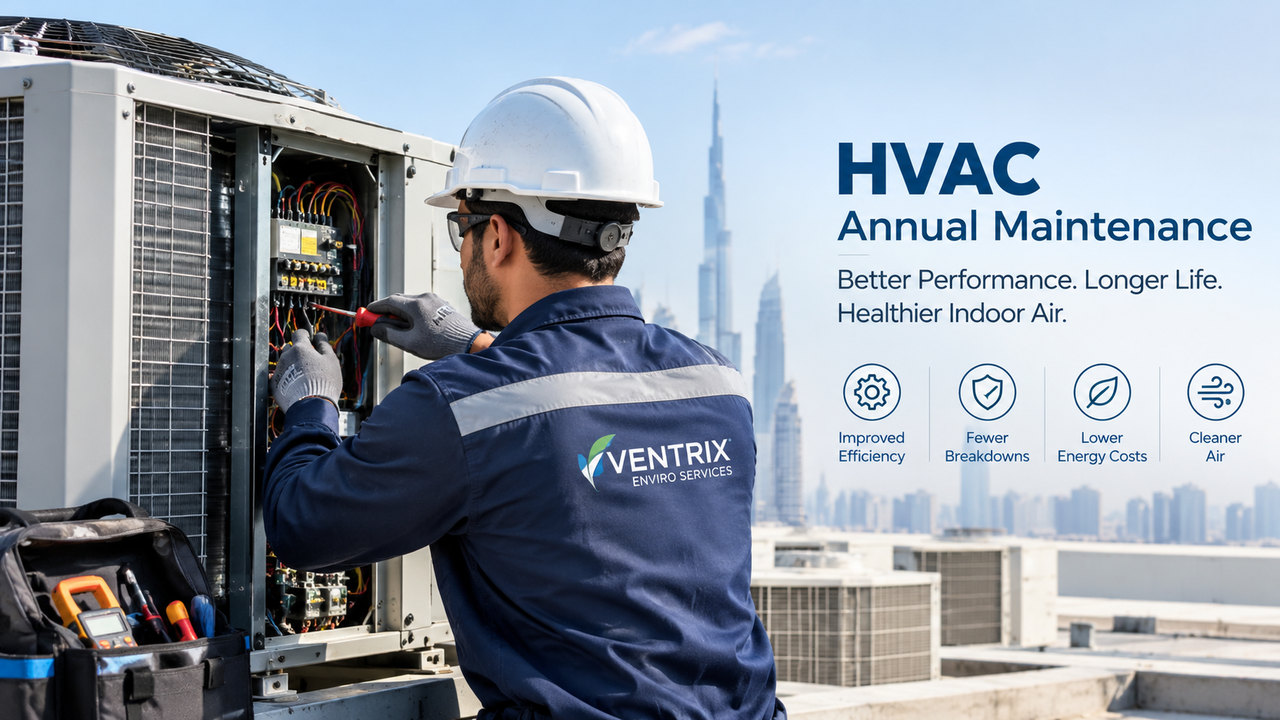
Quick Answer
The most common signs your HVAC system needs maintenance are uneven cooling, weak airflow, new noises or vibration, musty smells, frequent shutdowns, and an energy bill that rises without a clear reason. If two or more appear together, or any one lasts longer than a few days, arrange a professional inspection before the next period of peak cooling demand.
1. What Are the Early Warning Signs of HVAC System Failure?
A failing system rarely goes from fine to dead overnight. It drifts. These are the HVAC system warning signs building managers tend to notice first, roughly in the order they show up.
Uneven cooling across rooms or floors
Air handling units that deliver air unevenly are one of the earliest giveaways. If the fourth floor is comfortable while the seventh runs warm, or one wing of a hotel keeps drawing complaints, the cause is often a dirty coil, a struggling fan, or an airflow imbalance rather than a thermostat setting. Turning set points lower just makes the equipment work harder to compensate.
Unusual noises or vibration
Fan coil units, blowers, and compressors each have a normal sound. Grinding, rattling, squealing, or a new low hum usually points to a worn bearing, a loose component, or an unbalanced fan. These noises tend to get louder rather than disappear, and a bearing left to run dry can damage the parts around it.
Weak airflow from vents
Split AC units and ducted outlets that push out less air than before suggest a restriction somewhere upstream: a clogged filter, a dirty indoor coil, a blocked return, or debris in the duct. Section 3 digs into this one.
Persistent unpleasant odours
Musty or sour smells usually mean moisture is sitting where it shouldn't, such as a blocked drain pan or damp insulation. If the smell returns after surface cleaning, there may be microbial growth that needs proper treatment rather than an air freshener.
Frequent shutdowns or temperature swings
Short cycling, repeated tripping, and temperature swings of several degrees suggest that controls, sensors, or the equipment itself are under strain. A single trip may be a one-off. A pattern is worth logging with dates and times, because that record helps a technician narrow down the cause quickly.
2. Why Are HVAC Energy Bills Increasing Without Any Major Changes?
HVAC coil cleaning services matter for efficiency because dirt on a coil behaves like a blanket. A film of dust, grease, or pollen reduces how well the coil exchanges heat, so compressors and fans run longer to reach the same temperature. Dirty filters add restriction on top of that, and worn belts or ageing motors can add electrical load of their own.
HVAC maintenance Dubai programmes often begin with the energy bill because it is the one indicator every building already tracks. If consumption rises month after month while occupancy, operating hours, and weather look similar, something in the system is probably losing efficiency. Compare the same months across different years rather than back-to-back months, since seasonal swings can hide the trend. A rise is not proof of a fault, but it is a good reason to look closer.
3. How Can Poor Airflow Indicate a Hidden HVAC Problem?
Professional HVAC duct cleaning becomes relevant when airflow drops across several outlets at once. A single weak vent is more likely a local blockage, while a building-wide drop points at the system itself. Dust, construction debris, and sometimes biological growth build up inside ductwork over time and narrow the path the air has to travel.
Filters, coils, and fans are the other usual suspects. A clogged filter starves the system of return air. A contaminated coil blocks the surface the air needs to cross. A fan running below its design speed, whether from a slipping belt or a failing motor, moves less air even when everything else is clean. Lowering the thermostat fixes none of this; it only asks the equipment to push harder against the same restriction.
Duct camera inspection helps when nobody is sure what is inside the ductwork. Instead of guessing, a technician can see the actual condition, which keeps the choice between cleaning, repair, or leaving things alone grounded in evidence.
AC duct cleaning and disinfection is worth considering when airflow problems come with indoor air quality complaints. Air that moves poorly collects dust, moisture, and odours, and occupants tend to notice through stuffiness, dust on surfaces, or more frequent allergy-type complaints.
4. Why Do Some HVAC Problems Appear Only During Peak Summer in Dubai?
Summer doesn't create new faults so much as expose existing ones. When outdoor temperatures regularly pass 40°C and cooling demand stays high for months, any component that was marginal in spring has little room left to hide. A condenser coil with a thin layer of dirt copes in March and struggles in July. A refrigerant charge that was slightly low only shows up when the system is asked for maximum capacity.
HVAC preventive maintenance in the weeks before summer, usually delivered through HVAC annual maintenance services in Dubai, is meant to catch those marginal items while there is still time to fix them without an emergency. That means checking coils, filters, belts, drain lines, electrical connections, and controls, then comparing readings against what the equipment is designed to deliver. It also means booking early, because contractors fill up quickly once the heat arrives.
No inspection can promise a summer without faults. What it can do is move problems from "discovered during a heatwave" to "scheduled for a quiet week", which is a far better position for a building manager to be in.
5. What Should Building Managers Check Before Scheduling HVAC Maintenance?
A short walk-through can turn vague concern into useful notes. This HVAC maintenance checklist for buildings does not replace a technical inspection, but it gives the technician a head start and keeps the conversation specific.
☐ Cooling consistency. Note which floors, rooms, or zones run warmer than the rest, and at what time of day.
☐ Sounds and vibration. Listen near plant rooms, fan coil units, and rooftop equipment for anything new.
☐ Leaks and condensation. Look for water near indoor units, stained ceiling tiles, or wet insulation.
☐ Filters and airflow. Check filter condition and hold a hand to supply vents to compare airflow between outlets.
☐ Energy consumption. Compare recent bills with the same months last year.
☐ Occupant complaints. Count repeat complaints and record where they come from.
☐ Maintenance records. Pull up recurring faults, past repairs, and the date of the last full service.
Keep the notes dated and short. Photos help. Handing a technician a one-page summary saves site time, and site time is usually where the cost of an inspection goes.
6. How Often Should Commercial Buildings Schedule HVAC Maintenance in Dubai?
Commercial HVAC maintenance Dubai schedules depend less on the calendar than on the building. Equipment type, operating hours, occupancy, dust exposure, manufacturer guidance, and past performance all feed into how often a system needs attention. The table below shows common pressure points by building type, as a starting point rather than a rule.
| Building type | Main pressure points | Typical approach |
|---|---|---|
| Offices | Long daytime hours, comfort complaints | Periodic checks plus a full annual service |
| Hotels | Round-the-clock use, guest-room units, kitchens | More frequent checks and a defined annual plan |
| Residential towers | Shared plant, many fan coil units, tenant turnover | Regular plant checks and annual servicing |
| Healthcare | Continuous operation, strict air quality needs | Tighter intervals set with the facility's own requirements |
| Industrial | Dust, heavy heat load, long runtimes | Shorter filter and coil cycles, annual full service |
A written plan from any provider of HVAC annual maintenance services in Dubai should state intervals for each type of equipment instead of one number for the whole building. Chillers, air handling units, fan coils, and ductwork age differently, and a good schedule reflects that.
Kitchen exhaust cleaning belongs on the same planning calendar for hotels and restaurants. Grease build-up is a separate hazard from ordinary HVAC wear, and it follows its own timetable based on how heavily the kitchen is used.
7. Can Preventive HVAC Maintenance Reduce Emergency Repair Costs?
HVAC repair vs preventive maintenance is not really a contest of cost per visit. A planned inspection costs a predictable amount at a time you choose. An emergency call arrives with an unknown bill, urgent timing, and often a disrupted building. Planned work also tends to find worn belts, restricted airflow, early corrosion, and contaminated coils while they are still small jobs.
That said, maintenance does not make equipment immortal. Old compressors still fail, and no honest provider can promise zero breakdowns or a fixed percentage saving. What regular HVAC annual maintenance services in Dubai give you are fewer surprises, better records, and a stronger basis for deciding when to repair and when to replace.
8. When Should You Call an HVAC Maintenance Company in Dubai?
HVAC annual maintenance services in Dubai make the most sense once observation has done its job and measurement is needed. That point arrives when warning signs persist, cooling performance slips, the same fault keeps returning, or the energy bill keeps climbing with no explanation.
Depending on the equipment and agreed scope, a professional inspection may cover coils, filters, fans and motors, belts, drain pans and lines, electrical connections, controls and thermostats, refrigerant pressures, and airflow readings, followed by a written report. When comparing an HVAC maintenance company in Dubai, ask for that scope in writing so you know what each visit actually includes.
Ventrix Enviro Services works with building managers across offices, hotels, residential towers, and other properties, and the team can talk through your building's HVAC inspection and maintenance requirements before you commit to anything. HVAC inspection services Dubai buildings rely on should always start with a conversation about the equipment you actually have.
Water tank and pipeline cleaning is often arranged in the same visit window as HVAC work, since both belong on the building's yearly maintenance calendar. Bundling them can mean fewer access arrangements for tenants and one coordinated schedule for the facilities team.
Identify HVAC Warning Signs Before They Become Major Problems
Cooling performance, airflow, energy consumption, strange noises, and recurring faults are the five things worth watching every month. None of them is dramatic on its own. Together they tell you whether a system is holding steady or slowly losing ground, and catching the second case early is what keeps a building comfortable and an operations team out of crisis mode. If you recognise several of the signs above, booking HVAC annual maintenance services in Dubai before the next heavy-load period is a sensible next step.
Frequently Asked Questions
Need to Check Your Building's HVAC System Before a Breakdown Occurs?
Contact Ventrix Enviro Services to discuss your HVAC inspection and annual maintenance requirements in Dubai.
Call +971 504 558 845 WhatsApp Us Book Online