
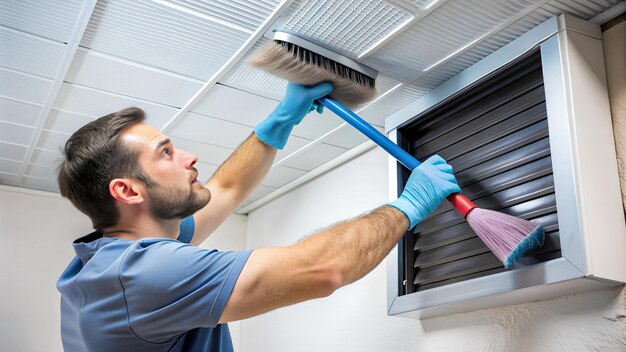
A grease fire doesn’t start at the stove. It starts further back — inside a duct that hasn’t been touched in eight months, behind a hood that only ever gets wiped down on the outside. Most restaurant owners in Dubai know they need some form of kitchen exhaust cleaning. Far fewer realise that “cleaning the exhaust” can mean three very different jobs: wiping the hood surface, clearing the grease filters, and scraping years of built-up grease out of the ductwork itself. Confusing these three is how a kitchen ends up passing a visual check while still carrying a serious fire risk hidden inside the walls.
This guide breaks down what kitchen duct cleaning in Dubai actually involves, how it differs from hood cleaning, and how to tell whether a kitchen’s exhaust system is genuinely clean or just looks clean at a glance. Ventrix Enviro Services handles this distinction daily across Dubai’s restaurant and hotel kitchens, and the pattern is almost always the same: the parts nobody can see are usually the parts that get skipped.
The Hood, the Duct, and the Fan Are Three Different Jobs
A commercial kitchen exhaust system is really three connected parts working as one unit. The commercial kitchen hood sits over the cooking line and captures rising, grease-laden air. Behind the hood, grease filters trap the heaviest particles before that air moves on. From there, the kitchen exhaust duct carries the air — and whatever grease slipped past the filters — up through the building to the roof, where the exhaust fan pushes it outside.
Grease doesn’t stop at the filter. Some portion of it always gets through, cooking onto the interior duct walls in a thin film that thickens with every service. A busy grill station can leave measurable grease buildup in kitchen ducts within weeks, not months. That’s the part of the commercial kitchen exhaust system most cleaning crews never actually reach, because reaching it means opening access panels and physically scraping duct interiors — not just spraying down the surfaces a diner or inspector can see from the kitchen floor.
Kitchen Hood Cleaning Dubai: What Gets Cleaned, and What Gets Missed
Kitchen hood cleaning in Dubai typically covers the hood canopy, the grease filters, and the plenum — the chamber directly behind the filters where grease first collects. A technician degreases the hood’s interior and exterior surfaces, removes and washes (or replaces) the filters, and wipes down the plenum area.
This is necessary work, and it’s also, on its own, incomplete. Filters catch most grease, but not all of it, and the plenum is only the first few feet of a duct run that can extend 20, 40, sometimes over 100 feet through a building before it reaches the rooftop fan. A kitchen that only ever books kitchen hood cleaning dubai-wide tends to look spotless at the cooking line while the ductwork above the false ceiling keeps accumulating grease, unseen, for years.
Kitchen Duct Cleaning Dubai: Why the Inside of the Ductwork Matters More
Kitchen duct cleaning in Dubai refers to the deeper job — accessing the ductwork itself through service openings cut at intervals along its length, then physically scraping, brushing, and degreasing the interior surfaces from the hood connection all the way to the exhaust fan and rooftop discharge. This exhaust duct cleaning process typically includes kitchen exhaust fan cleaning as well, since grease that survives the duct run collects on fan blades and housings and can restrict airflow or seize moving parts over time.
This is the work that fire inspectors and insurance assessors actually care about, because grease sitting inside a duct is what turns a stovetop flare-up into a duct fire that travels through a building. NFPA 96 — the US National Fire Protection Association standard most fire-safety and mechanical codes in the region reference for commercial kitchen ventilation — specifically calls for inspection and cleaning of duct interiors, not just hoods and filters, at intervals tied to cooking volume. A restaurant can have spotless filters and a genuinely dirty duct at the same time; the two aren’t linked.
Hood-Only Cleaning vs Full Kitchen Hood and Duct Cleaning
The table below sets out what each service actually covers, so it’s clear what’s being paid for either way.
| Aspect | Hood-Only Cleaning | Full Kitchen Hood and Duct Cleaning |
|---|---|---|
| What’s cleaned | Hood canopy, filters, plenum | Hood, filters, plenum, full duct interior, exhaust fan |
| Access required | Front-facing only, no cutting | Service openings cut into ductwork at set intervals |
| Fire risk addressed | Surface-level, cooking-line area | Entire grease path, hood to rooftop discharge |
| Typical frequency | Weekly to monthly (filters) | Quarterly to semi-annually, by cooking volume |
| Compliance value | Partial — filters and hood only | Meets NFPA 96–based duct inspection expectations |
| Best suited for | Low-volume kitchens, between full services | All commercial kitchens, especially high-volume grills and fryers |
Compliance in Dubai: Why This Isn’t Just About Fire Risk
Dubai’s food business licensing and civil defence approval processes both touch kitchen ventilation, and inspectors increasingly expect documented proof of commercial kitchen exhaust cleaning dubai operators can produce on request — not just an invoice, but before-and-after photos of the duct interior and a record of when the fan and ductwork were last opened and degreased. Insurers ask a similar question after a kitchen fire claim: was the exhaust system serviced to a recognised standard, and can that be proven?
A hood that’s wiped weekly but has never had its ductwork opened in two years won’t satisfy either party. This is the gap that catches most independent restaurants — not because owners are ignoring maintenance, but because “kitchen exhaust cleaning” often gets sold, and delivered, as hood service only, with the duct work quietly left out.
How Often Should a Restaurant Kitchen Exhaust System Be Cleaned?
Frequency depends on cooking volume and fuel type, not a fixed calendar date:
- High-volume operations: 24-hour kitchens, solid-fuel grills, heavy fryer use — every 1–3 months
- Full-service restaurants: Moderate grill and fry volume — every 3–6 months
- Low-volume kitchens: Cafés and light food-prep operations — every 6–12 months
Grease filter cleaning needs attention far more often than the rest of the system — weekly washing is standard in busy kitchens — but that’s a separate, lighter task from opening the ductwork itself.
What to Look for in Kitchen Duct Cleaning Companies in Dubai
Not every company advertising kitchen exhaust cleaning actually opens and cleans the duct interior. Before booking, it’s worth confirming:
- Do they open access panels along the duct run?
- Do they photograph the duct interior before and after?
- Do they clean the exhaust fan and rooftop discharge?
- Can they reference NFPA 96 or an equivalent standard?
- Do they patch and reseal every access panel they cut?
Reputable kitchen duct cleaning companies in Dubai will walk through this checklist before quoting, rather than pricing a flat “kitchen exhaust cleaning” fee without specifying what’s actually included. Full-system service — hood, filters, complete duct interior, and fan, with photo documentation for compliance and insurance purposes — is covered in detail on the Kitchen Exhaust Duct & Hood Cleaning service page. Restaurants dealing with general HVAC duct cleaning or AC duct disinfection needs on the front-of-house side can find those covered separately, since kitchen exhaust and comfort-cooling ductwork are cleaned as distinct systems.
The Bottom Line
“Kitchen exhaust cleaning” and “kitchen duct cleaning” get used interchangeably, but they’re not the same service, and the difference matters more than most restaurant owners realise until a fire inspector — or a fire — makes the point for them. Hood and filter cleaning keeps the visible parts of the system presentable. Kitchen duct cleaning in Dubai is what actually removes the grease sitting inside the ductwork, where it poses the real fire risk and where compliance checks actually look.
If a kitchen has only ever had the hood serviced, it’s worth having the full exhaust system — duct and fan included — properly inspected. Ventrix Enviro Services carries out full kitchen hood and duct cleaning across Dubai’s restaurant, hotel, and commercial kitchen sector, with documented, code-referenced service on every project. Request an inspection to find out what condition your ductwork is actually in.
If a kitchen has only ever had the hood serviced, it’s worth having the full exhaust system — duct and fan included — properly inspected.
Request an inspection to find out what condition your ductwork is actually in.